Talks

My public speaking engagements aim to translate the complex ethical challenges of embodied technology and spatial computing into simple and actionable design solutions.
See below for a selection of my favorite sessions.
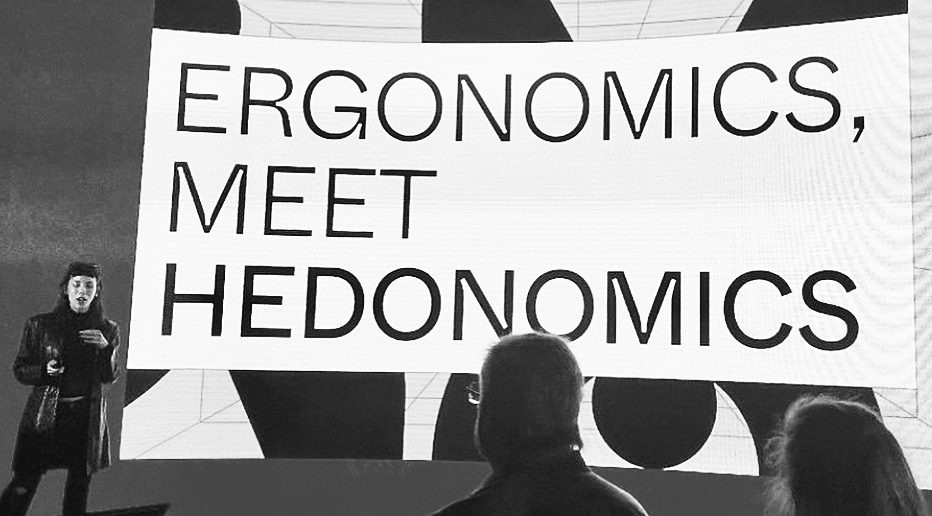
“Easing the Transition to XR Design”
This talk is a condensed version of a graduate-level class taught at NYU that unpacks the tools, processes and ethical considerations of AR and VR design—specifically architected to help 2D designers and technologists transition into XR.
October 2025 | NYU Tandon | Brooklyn, NY
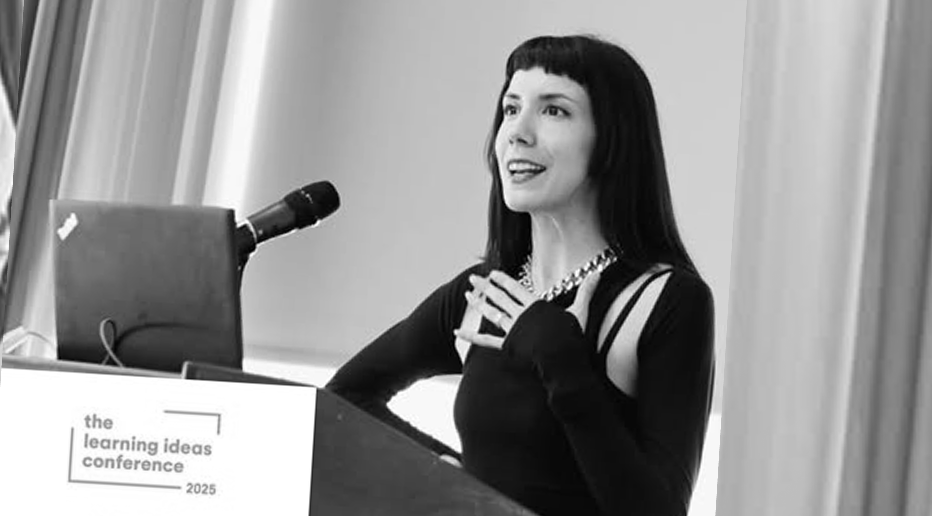
“Strategies and Frameworks for Creating Ethical XR Experiences”
This presentation compiles a decade's worth of strategies and subject-matter that have proven successful in teaching spatial computing concepts and practices. As a means to develop XR experiences that are both enjoyable and accountable, this learning approach proposes we borrow structures and principles from Hedonomics, a branch of ergonomic science that facilitates pleasurable human-technology interaction. Through the Hedonomic Pyramid, we’re able to unpack a hierarchical checklist of proven practices built to serve as a quick-start guide for implementing inclusive spatial interfaces and systems.
June 2025 | Columbia University | New York, NY
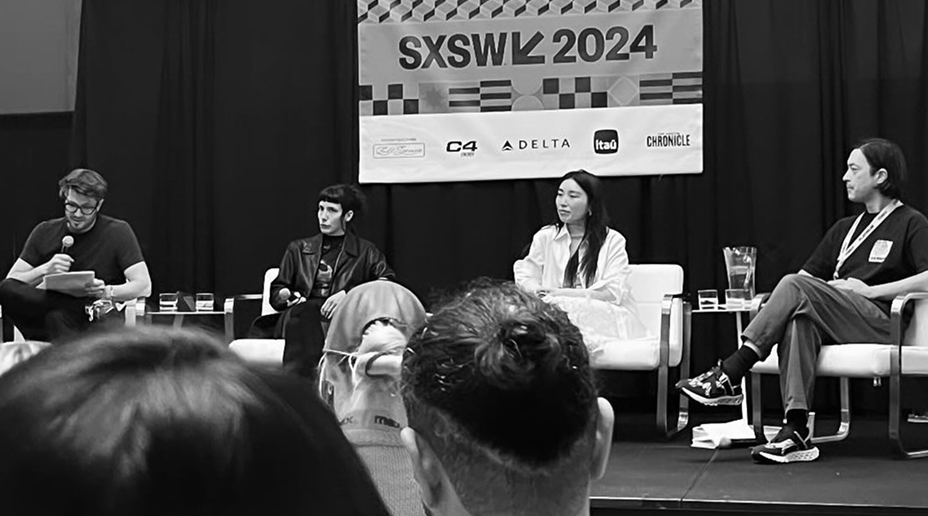
“Designing for New Realities”
Embrace the Future: Designing for New Realities is a visionary SXSW panel that explores the futuristic landscape of 3D design, its impact on AR/VR experiences, and XR concepts. Expert designers, developers, and innovators will converge to share insights on designing for immersive interactive experiences, their considerations and principles, and how to unlock the boundless possibilities of designing for the human body and the world around them.
March 2024 | JW Marriott @ SXSW | Austin, TX
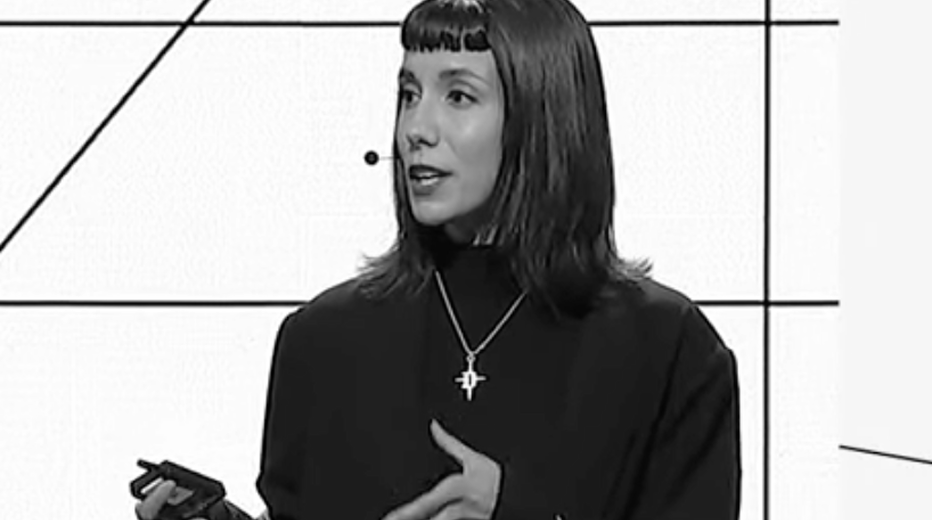
“Leaving Flatland”
Can an audience of design thinkers absorb the core processes and ideological frameworks of XR product design and find themselves ready to leave 2D design behind in just 40 minutes? Let’s find out. This talk is a condensed version of a graduate-level class taught at NYU that unpacks the tools, processes and ethical considerations of VR design—specifically architected to help 2D designers transition into XR.
June 2023 | Moscone Center | San Francisco, CA
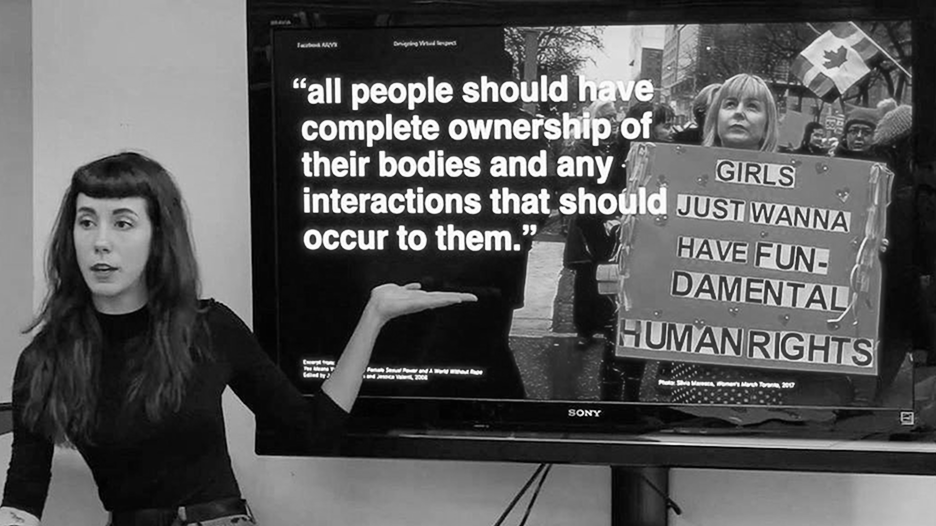
“In Conversation with Michelle Cortese”
Virtual reality designers accept the ethical responsibilities of removing a user’s entire world and replacing it with a reality of their own creation. These unique challenges are intensified when virtual experiences become public and socially-driven. This discussion unpacks Cortese’s experience co-authoring “Designing Safe Spaces for Virtual Reality”—a Facebook Research publication and chapter in Ethics in Design and Communication: New Critical Perspectives.
October 2019 | MIT Media Lab | Cambridge, MA
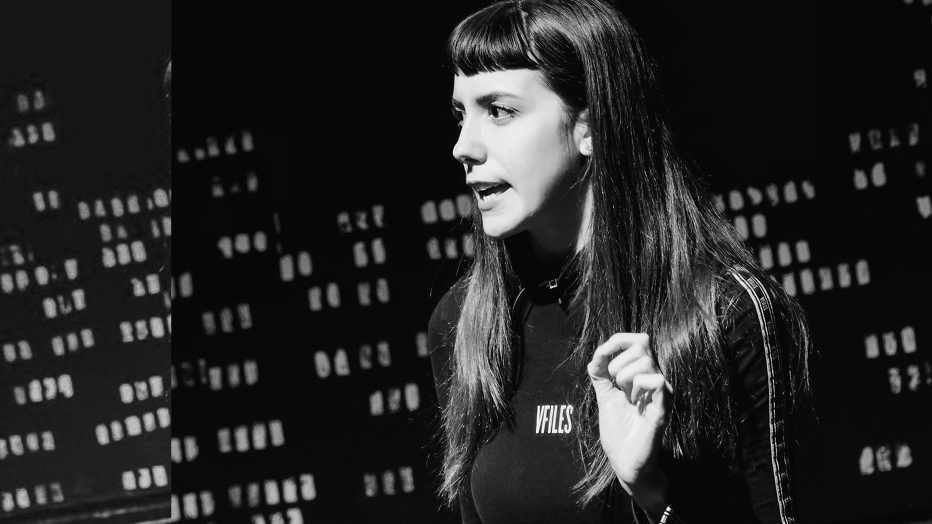
“Designing Respect for Virtual Reality”
This discussion unpacks opportunities to fold the language of consent and body sovereignty into the design practice of virtual reality—as a means to design safe, accessible and inclusive virtual spaces.
April 2019 | Glasshouse International Centre | Newcastle, UK
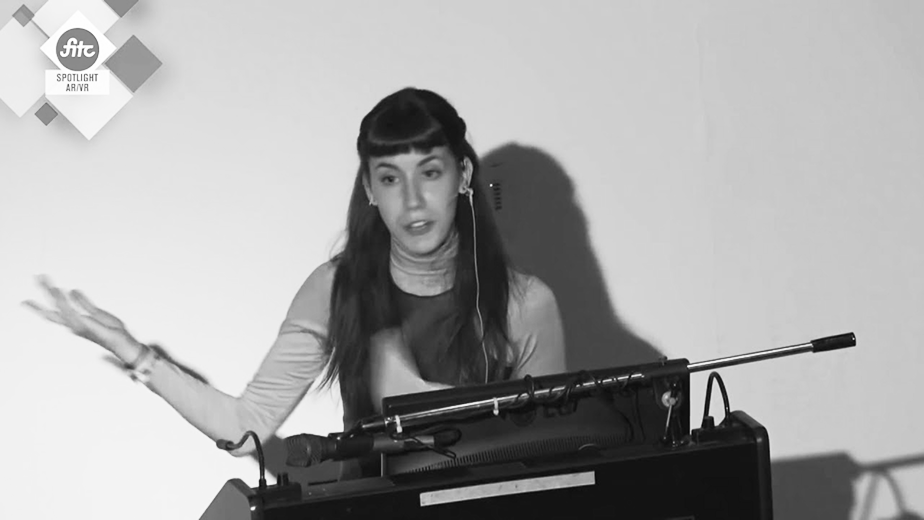
“Auteurism in 360 Degrees”
By the early-mid 20th century, the artistic merit of film had yet to be fully realized. This mirrors the present state of 360 media and VR filmmaking: we have yet to find artistic equivalents to classical cinematic techniques in immersive filmmaking. This talk unpacks methodologies for translating the styles, standards, and practices of 2D filmmaking into 360 media and VR film.
December 2018 | OCAD University | Toronto, ON
“FUTURE TYPE”
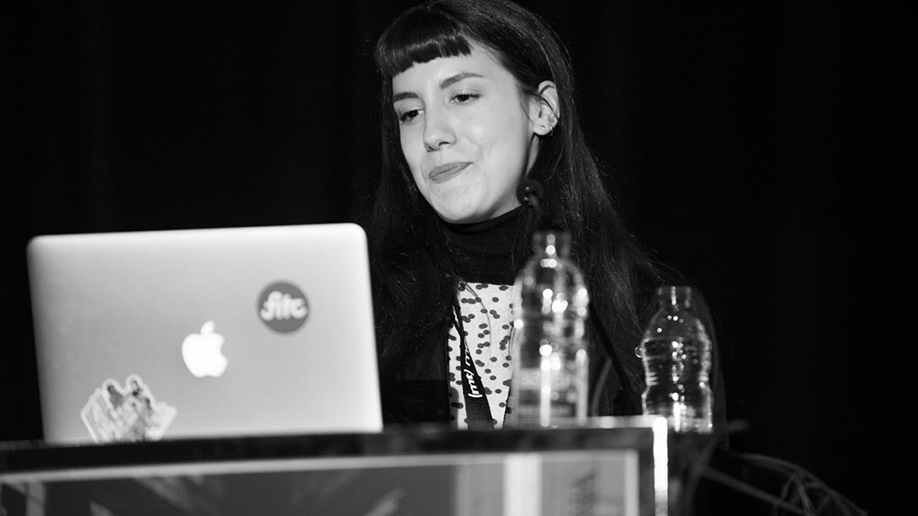
This talk unpacks a condensed history of typography and justifies why said history can be used as a jumping off point for designing the future of user interfaces. We will discuss how to reconsider typographic history—and the nuances of phonetic letterforms—when inventing new user interfaces for a future of modular, invisible, and alternate reality devices.
June 2017 | Sheraton Centre | Toronto, ON
LIST VIEW
See all
-
XR Motion Conference: Easing the Transition to XR Design [2025]
The Learning Ideas Conference: Strategies and Frameworks for Creating AR/VR Experiences [2025]
Harvard XR: Women in XR [2024]
IxDC Beijing: Designing Safety for Social Virtual Reality [2020]
MIT Open Doc Lab: In Conversation with Michelle Cortese [2019]
Thinking Digital Conference: Designing Respect for Virtual Reality [2019]
Spotlight AR/VR @ OCAD University: Auteurism in 360 Degrees [2018]
FITC Toronto: Using the History of Typography to Inform the Future of UI [2017]
-
NYU Tisch, Interactive Telecommunications Program: Creator and instructor of ‘Hedonomic VR Design.’ Developed interdisciplinary curriculum integrating XR prototyping (Unity/C#), design ethics, and human-centered hedonomic frameworks. [2021–Present]
NYU Tisch, Drama: Creator and instructor of ‘Social VR Performance.’ Enabled drama students to build live theatrical performances in embodied virtual spaces. Outcomes featured on Spectrum News. [2020]
NYU Steinhardt, Music Technology: Instructor of ‘Digital Electronics Lab.’ Taught foundational physical computing and electronics for musical synthesizer and interface design. [2019]
CUNY Queens College, Design BFA: Creator and instructor of ‘Advanced 3D Design.’ Introduced 3D modeling and digital form-making with Cinema4D within broader contexts of interaction and experiential design. [2018]
-
-
Columbia University, School of International and Public Affairs: recurring special lecture in Laura Scherling’s ‘Ethics of Media, Technology & Design’ class [2024-2026]
Royal College of Art: special presentation on ‘Bionic Perspectives on Hedonomics’ hosted by Sonia Litwin [2025]
Columbia University, Teachers College: special lecture in Dave Sheinkopf’s class on interactive design with game engines [2025]
NYU ITP, ITP Camp: special presentation hosted by student Szeyin Lee [2025]
Columbia University, GSAPP: recurring guest critic for Nitzan Bartov’s ‘VIRTUAL ARCHITECTURE’ class [2021-2025]
Columbia University, GSAPP: special lecture in Violet Whitney’s ‘Spatial UX’ class [2024]
California College of the Arts: special lecture in Pia Zaragoza’s ‘Experience Design’ class [2024]
School of Visual Arts, Computer Arts: special lecture in Mary Franck’s ‘Emerging Practices: The Computational Image’ class [2020]
-